The Art
Having others listen to your story is a function of power in our culture. The more power you have, the more people will listen respectfully to your story. To listen respectfully to a person’s story is to honour that person’s intrinsic worth and to empower the storyteller in a constructive way.
-Kay Pranis, 2005
The people interviewed expressed they've never talked about this experience before. Healing is most affective when done in community, not isolation. The artists carry those voices to you, the viewer, confirming through empathetic artistic expression, that these stories matter.

Research Reflections
As a member of my own research population, reflection was key to maintaining ethical attunement. Inviting artists to steward the stories made sure my analysis didn't become clouded with my own lived experience.
The above image is my creative expression from reading the full transcripts of my participants. What I felt in these stories was a layered and complex reality. Emotions are many and varied, and these folks often hold many emotional responses at once and for extended periods of time.
Healing leads us to realize that no matter how impactful these events, the experience of relational victimhood is but a mere/mirror piece of who we are. This piece requires the viewer to see small pieces of themselves within the experience and life of another.
Mere/Mirror Pieces of Us

Kyla Carrier
"Torn Echoes"
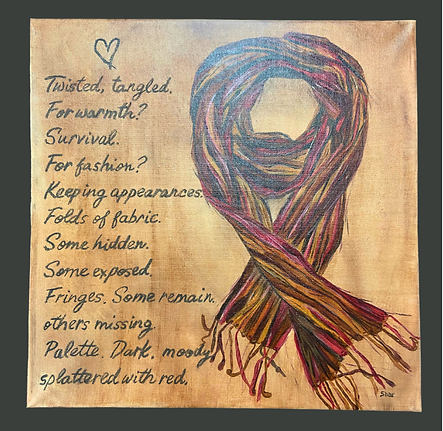
Sharlene Stanley
"Scarf"

Victoria Koops
"Restored"

Sara Irwin
"An Enduring Love"

Regan Lanning
"Punish Them All"

Em Ironstar
"Silence was a Mistake"